
What's inside
- Best Thermal Pad for GPU Cooling: Thickness by Position, Softness Over Headlines, and the Load Test
- Quick Comparison: Best Thermal Pad for GPU Cooling Models
- Detailed Reviews: Best Thermal Pad for GPU Cooling Picks
- Buying Guide: How to Choose the Best Thermal Pad for GPU Cooling
- Frequently Asked Questions About the Best Thermal Pad for GPU Cooling
As an Amazon Associate I earn from qualifying purchases. This post may contain affiliate links at no extra cost to you.
A thermal pad fails in silence, which is what makes its parish more exacting than its size suggests: a pad a fraction too thick holds a cooler off the components it must touch and cooks the very memory it was bought to save, while a pad a fraction too thin touches nothing at all and reports for duty in a temperature log as though it were working. The best thermal pad for GPU cooling is therefore bought, in this guide’s doctrine, as a measured fitting before it is bought as a material: the original pads’ thicknesses established per position, from the card maker’s documents where they exist, from the removed citizens measured carefully where they do not, since a graphics card commonly wears several thicknesses at once, memory, voltage regulation, and backplate parishes each with their own sentence, and a single sheet bought for the whole card is the parish’s classic first error. Conductivity’s headline figure is the second fact, and it is handled here with a candour the category resists: the number is real, and it is not a common currency, each maker measuring in its own parish, so a figure twice another’s does not promise a card twice as cool, the pad’s softness, its compression into the actual gap, and its contact across the whole component commonly deciding more than the headline, a doctrine this guide proves the only way it permits anything to be proven, in temperatures under load, before and after, on the owner’s own card.
The work itself carries two standing cautions, stated before any product. Opening a graphics card is a warranty parish, its terms read in the card maker’s documents for the owner’s own region before a screw is turned, a card under a valued warranty being a citizen whose pads are the maker’s problem and not the owner’s project. And the card is handled as the electronics parish demands, power wholly off and disconnected, the work on a clean bench, the original screws’ positions and the original pads’ parishes photographed before anything is lifted, since a card, like every system in this site’s coverage, is reassembled from evidence or it is reassembled from memory, and memory is the parish where connectors are forgotten. The temperatures that justify the work are also read first, memory and hotspot parishes logged under a real load with the tools the card’s own software parish provides, since a repad performed on a card whose temperatures were never measured is a remedy for an undiagnosed citizen, and a card whose memory runs within its maker’s parish may need nothing but its dust removed, the cheapest cooling in this entire guide.
The pads compared here are real, currently sold products from Gelid, Thermalright, Arctic, Thermal Grizzly, and Fujipoly, spanning the soft high-conductivity citizens, the value sheets, and the specialist parishes. They are graded on fit first, the thicknesses offered in the maker’s line against the card’s measured parishes, a line that cannot supply your card’s sentence being the wrong line however fine its figures; conformity second, a pad’s softness and compression into the real gap, read in its maker’s terms and proven by the temperatures that follow; the stated conductivity third, as one dialect among several, never as a league table; working manners fourth, a pad that can be cut cleanly, placed without tearing, and, at the next service, removed without leaving its parish across the board, since a graphics card is serviced more than once in its life; and value last, per card rather than per sheet, a repad consuming several thicknesses and the offcuts of each, the true figure being the whole order that leaves the card correct. Paste’s parish, the die’s own citizen, is governed by its own guides on this site and is not this article’s, beyond the doctrine that the two parishes are serviced together or the card is opened twice for one temperature.
Our Top Picks
Best Thermal Pad for GPU Cooling: Thickness by Position, Softness Over Headlines, and the Load Test
Measuring the Card: Every Position Its Own Sentence
The card is measured as a system of parishes, each with its own thickness, and the audit’s first hour is spent with the card’s documents and, where the work proceeds, with the removed citizens themselves. The card maker’s and the board partner’s documents are read first, several houses publishing or confirming pad thicknesses for their cards through their support parishes, a fact that outranks every forum’s table, since a board’s revisions change its parishes while wearing one name, the exact card’s exact revision being the fitting’s identity in this guide’s standing law. Where documents are silent, the original pads are the evidence, removed carefully, their thicknesses measured with a caliper’s parish at an uncompressed edge, their positions photographed and mapped on paper before a single citizen is discarded, the map being the repad’s whole constitution. A pad compressed in service reads thinner than its birth figure, a correction the experienced hand applies by comparing positions and by the documents where any exist, and a thickness guessed across that gap is graded, in this guide’s honesty, as the parish’s most expensive guess, its tuition being a card opened a second time or, at the worst reading, a memory parish cooked under a cooler held open by its neighbour’s ambition.
Cutting and placement follow the map as a liturgy. Each pad is cut to its component’s parish with a margin’s discipline, covering the citizen it serves without wandering onto its neighbours, its protective films removed at the moment of placement and not before, a film left in place being a parish this guide mentions because the owners’ record insists it happens, an insulator installed with confidence and discovered at the temperature log. The cooler is reseated as its maker directs, its screws taken up evenly in their pattern, the card’s own parish respected as a torqued citizen whose figures live in the card’s documents and not in this article. The backplate’s parishes, where the card wears pads there, are serviced in the same sitting with the same map, a half-repadded card being an opened card whose second half will ask a second opening.
Reading Conductivity, Softness, and the Temperatures That Grade Them
Conductivity figures are read as dialects of one language, each maker’s number honest in its own parish and none of them a currency exchangeable at face value, a doctrine this guide applies to every rated citizen it grades. What the figures do establish is a maker’s own line’s internal order, its standard citizen against its summit’s, and the parish a pad belongs to, the soft high-conductivity citizens having earned their record in the owners’ temperature logs across many cards, which is evidence of a kind a headline is not. Softness is the figure’s necessary translator: a pad must compress into the gap it fills, meeting both surfaces wholly, a hard citizen at a summit’s conductivity bridging a real gap worse than a soft citizen at a modest figure that actually touches, the hand learning the difference in the cutting, a pad that tears like wet paper and one that cuts like a firm eraser being different tools for different gaps, each graded per position in the audit.
The proof is the load test, performed as this site performs every thermal claim. The card’s temperatures are logged before the work, memory and hotspot and core, under a load the owner actually runs, a game or a render sustained long enough for the card to reach its settled parish, the figures written down with the load’s name. The same load, in the same room, grades the work after, the memory’s parish being the repad’s report card and the core’s a witness to the cooler’s reseating, a core that worsens while memory improves being the classic signature of a pad a fraction too proud, the card reopened on that evidence while the bench is still set. A change is made one parish at a time where any doubt exists, in the standing doctrine of this site’s troubleshooting coverage, since a card repadded everywhere at once and worse everywhere at once is a diagnosis with no citizens left to interview.
Quick Comparison: Best Thermal Pad for GPU Cooling Models
| Model | Thicknesses, Conductivity Terms and Key Specs | Best For | Typical Price Range |
|---|---|---|---|
| Gelid GP-Ultimate Class | Thickness patterns in Gelid’s line, conductivity and softness terms in maker’s stated documents by pattern | Best thermal pad for GPU cooling overall | $12 – $22 per sheet by size |
| Thermalright Odyssey Class | Thickness patterns in Thermalright’s line, terms in maker’s stated documents by pattern | Best soft parish | $10 – $18 per sheet by size |
| Gelid GP-Extreme Class | Patterns in Gelid’s line, terms in maker’s stated documents by pattern | Best value performance | $9 – $16 per sheet by size |
| Arctic TP-3 Class | Stackable and thickness patterns in Arctic’s line, terms in maker’s stated documents by pattern | Best fitting parish | $8 – $15 per sheet by size |
| Thermal Grizzly Minus Pad Class | Patterns in Thermal Grizzly’s line, terms in maker’s stated documents by pattern | Best documented parish | $10 – $20 per sheet by size |
| Fujipoly Sarcon Class | Specialist patterns in Fujipoly’s line, terms in maker’s stated documents by pattern | Best specialist parish | $18 – $35 per sheet by size |
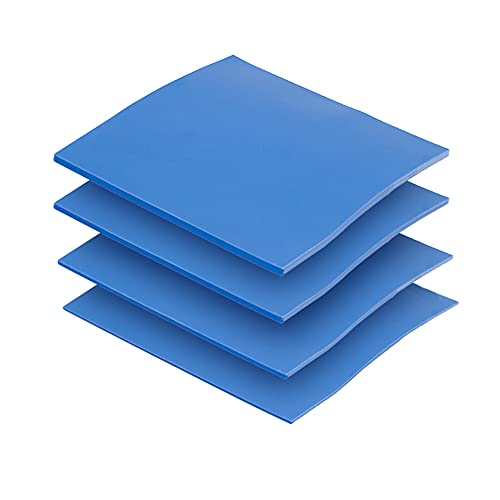
OwlTree 4 Pack Thermal Pad,100x100mm 0.5mm 1mm 1.5mm 2mm Highly Efficient Thermal Conductivity 6.0 W/mK,Heat Resistant Silicone Thermal Pads for Laptop Heatsink CPU GPU SSD IC LED Cooler
As an Amazon Associate we earn from qualifying purchases. Product prices and availability are accurate as of the date/time indicated.

Thermal Grizzly PhaseSheet PTM 50x40 mm Phase-Change Thermal Pad CPU GPU | Phase-Change Thermal Pad, PTM, CPU, GPU, Consoles - Strong Contact, Easy Handling, Non-Conductive, Paste Alternative
As an Amazon Associate we earn from qualifying purchases. Product prices and availability are accurate as of the date/time indicated.

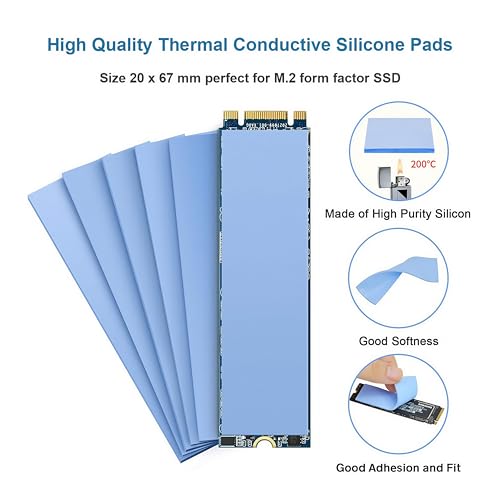
A ADWITS [ 6-Pack ] Thermal Conductive Silicone Pads, Soft Safe Simple to Apply for SSD CPU GPU LED IC Chipset Cooling -Blue


As an Amazon Associate we earn from qualifying purchases. Product prices and availability are accurate as of the date/time indicated.
Prices shown are approximate and for reference only. Prices change often, so please check the current price on Amazon before you buy.
Thicknesses, conductivity, and softness terms are each maker’s stated details for the current version and pattern, and conductivity figures are not directly comparable across makers. Ratings are editorial for GPU cooling: the thicknesses a card actually needs being offered, conformity into real gaps, temperatures proven under load, working manners across services, and value per card.
Detailed Reviews: Best Thermal Pad for GPU Cooling Picks
1. Gelid GP-Ultimate – Best Overall
Gelid’s Ultimate parish takes the overall rating as the memory parish’s reference citizen in its line: soft enough to meet a real gap wholly, stated in a full range of the thicknesses cards actually wear, and proven in the owners’ logs across many boards.
Proven under load, it earns its place outright.
2. Thermalright Odyssey – Best Soft Parish
Thermalright’s parish conforms in its line where a gap is uneven and a component’s parish is delicate, for the card whose original citizens were soft and whose replacement must be a citizen of the same manners.
For that card, it stands.
3. Thermal Grizzly Minus Pad – Best Documented Parish
Thermal Grizzly’s parish is graded in its line for a maker’s documentation that treats its buyer as a technician, its terms and its thicknesses stated with a precision the audit can use.
Within its parish, it earns its place.
4. Gelid GP-Extreme – Best Value Performance
Gelid’s Extreme citizen brings most of its sibling’s parish in its line at a friendlier figure, for the card whose several thicknesses make the whole order, rather than any sheet, the budget’s real citizen.
For the whole card, it is soundly placed.
5. Fujipoly Sarcon – Best Specialist Parish
Fujipoly’s parish serves the specialist in its line, gaps and parishes the common lines do not address, its figure graded against the card it saves rather than against a sheet’s.
For that card, it is soundly placed.
6. Arctic TP-3 – Best Fitting Parish
Arctic’s parish closes the table with a stackable citizen in its line whose terms address the odd gap honestly, used as its maker directs and proven, as every row’s work is proven, in the load test’s temperatures.
As the fitting row, it completes the table.
Buying Guide: How to Choose the Best Thermal Pad for GPU Cooling
The Technician’s Audit: Temperatures First, Thicknesses Mapped, Warranty Read
Write the audit’s five facts before a sheet is ordered, with the card’s documents and a temperature log both open. The temperatures: memory, hotspot, and core logged under your real load, settled and written down, the repad’s justification and its future report card in one page. The warranty: the card maker’s terms for your region read in their text, a valued warranty deferring the work to the maker without apology. The thicknesses: established per position, from the card’s documents where they speak and from the removed citizens measured and mapped where they do not, the exact card and its revision being the fitting’s identity, no forum’s table outranking either. The order: every thickness the map names, in the line whose softness matches the original citizens’ manners, its films and its cutting planned, the whole card’s figure totalled rather than a sheet’s. And the proof, prescribed before the first screw: the same load, the same room, the same log after the work, a worsened core beside an improved memory being a reopened card while the bench is set, because a repad, like a zero in this site’s rifle guides, is a property evidenced, and its evidence is a temperature. Order against the five, and let a card whose documents will not disclose its parishes and whose pads will not measure honestly be serviced by its maker instead, a verdict the audit is entitled to reach.
Spend by the card’s priorities, which are the guide’s: the thicknesses first, exact per position, since a wrong figure is a total loss at any conductivity; conformity second, a soft citizen that touches over a hard one that bridges; the stated figure third, within a maker’s own line; working manners fourth, across the card’s whole life of services; and a conductivity headline never, a number from another maker’s parish wearing a comparison’s clothes. Refuse, in the same pass, the parish’s two frauds: the single sheet sold for a whole card, one thickness wearing a system’s name, and the stack, pads piled to reach a gap, a parish of interfaces where one citizen’s contact was the whole profession, because a card under load, like a range in this site’s guides, is graded by its hottest citizen at its second hour, and that citizen belongs, by doctrine, to a measured fitting.
Keeping the Card: The Map Kept, the Offcuts Labelled, the Log Continued
Maintain the repad as a documented service with a bench’s liturgy. The map is kept with the card’s papers, positions and thicknesses and the citizens used, with the load test’s before and after figures beside it, so the next service begins from evidence rather than from a second archaeology. Offcuts are labelled by their thickness and their line, a drawer of anonymous grey citizens being a future error already cut to size. The temperature log is continued at the season under the same load, a rising memory parish being the card’s early sentence about dust, a pad’s ageing, or a fan’s parish, each read in the troubleshooting order this site prescribes, cheapest citizen first.
Keep the record with the machine’s papers, card and its parishes as serviced, so a successor owner or a future self inherits a maintained citizen. Do that, the thicknesses measured, the films removed, the load test passed, and the best thermal pad for GPU cooling becomes what its buyer wanted from a sheet of grey parish with a silent profession: a memory temperature that simply stays where the log says it should, hour after hour, which is the whole of what the pad was for.
Frequently Asked Questions About the Best Thermal Pad for GPU Cooling
What is the best thermal pad for GPU cooling?
Gelid’s GP-Ultimate parish overall, soft, fully ranged in the thicknesses cards wear, and proven in owners’ logs, with Thermalright’s Odyssey the soft parish, Thermal Grizzly’s citizens the documented ones, Gelid’s Extreme the whole card’s value, Fujipoly’s the specialist’s, and Arctic’s the odd gap’s fitting. Fit yours by the technician’s audit in this guide: your card’s temperatures logged under your real load before any work, its warranty terms read for your region; its pad thicknesses established per position from its maker’s documents or from the removed citizens measured and mapped, the exact card and revision being the identity; the line chosen whose softness matches the original citizens’ manners; and the same load test run after, memory as the report card and core as the witness, because a thermal pad is graded by a temperature under load, and the temperature belongs in a log, before and after, or the work was never graded at all.
What thickness of thermal pad does my GPU need?
The thicknesses its own parishes were built with, plural in most cards, established from evidence rather than from a category’s habit. Read the card maker’s and board partner’s documents first, several houses confirming pad thicknesses through their support parishes for the exact card and revision, that sentence outranking every forum table, since revisions change parishes while wearing one name. Where documents are silent, the removed originals are the evidence, measured carefully at an uncompressed edge with a caliper’s parish, mapped by position on paper before any citizen is discarded, a service-compressed pad reading thinner than its birth figure and the correction applied with the documents’ help where any exists. Buy each position its own sentence, never one sheet for the whole card and never a stack to reach a gap, and prove the result in the load test, a worsened core beside an improved memory being the signature of a pad a fraction too proud, corrected while the bench is still set.
Does a higher W/mK rating mean a cooler GPU?
Not across makers, and only modestly within one, the honest answer being that the figure is a dialect and the contact is the language. Each maker measures its conductivity in its own parish, so the numbers are not a common currency and a pad advertising twice another’s figure does not promise a card twice or even measurably cooler, a claim this guide refuses to print for any row. What decides a real card’s memory temperature is the whole sentence: the thickness exact for the gap, the pad soft enough to compress into it and meet both surfaces wholly, its parish covering the component without wandering, and the cooler reseated evenly in its maker’s pattern. Within a single maker’s line, its stated order, standard against summit, is a fair guide and the summit citizens have earned their record in owners’ logs. Across lines, buy by fit and conformity, then prove it in the only court this parish recognises, your own card’s temperatures under your own load, before and after, in writing.
Will replacing thermal pads void my GPU warranty?
It can, and the only document that can answer for your card is its maker’s warranty terms for your region, read in their text before a screw is turned. The position varies by maker and by jurisdiction, some parishes treating a careful opening kindly and others treating any opened card as a closed conversation, with the practical addition that a card returned with disturbed pads and a temperature complaint has given its maker a parish to point at whatever the law says. This guide’s doctrine is therefore plain: a card under a warranty you value, running hot, is the maker’s service parish, not your bench; a card out of warranty, or one whose maker states the work is permitted, is serviced by the audit, temperatures logged first, thicknesses mapped, films removed at placement, and the load test as the proof. Keep the original pads and the map with the card’s papers either way, since evidence is the whole profession, and a card whose history is documented is a citizen any future hand can grade.
Related guides
- Best Headphones for Streaming Music on PC in 2026: 6 Headphones With a Clear Sound, a Comfortable Fit, and a Wired or Wireless Connection That Works With a PC Without Latency That Ruins Music
- Best Power Bank With Solar Charging for PC Gamers in 2026: 6 Solar Power Banks Under 100Wh That Can Charge a Steam Deck at 45W, With a Built-In Solar Panel for Backup Power Outside
- Best Cheap RAM Kit for Students in 2026: Match Your Machine’s Generation First, Buy Capacity in a Matched Pair, and Never Mix What You Already Own
- Best 3D Printer Filament vs Resin for PC Gamers in 2026: 7 3D Printers Compared for Filament, Resin, and Reliable Gaming Prints
More from Amazon
Programs that pair well with the guide above. Offers and eligibility are set by Amazon and may change.
Free shipping on eligible items, Prime Video and more. Eligible new members can start with a free trial.
Start a Prime free trialAd-free music streaming. Eligible new subscribers can start with a free trial.
Try Music Unlimited freeA Prime membership for ages 18-24 with a trial period. Eligibility is set by Amazon.
See Prime for Young AdultsAudiobooks and podcasts to listen to on the go. Eligible new members can start with a free trial.
Try Audible freeAs an Amazon Associate we earn from qualifying purchases.

Write Your Review
No reviews yet. Be the first to share your experience!