
What's inside
- How to Choose Smartwatch Band Material for Allergies: At a Glance
- How to Choose Smartwatch Band Material for Allergies: The 7 Bands Reviewed
- How to Choose Smartwatch Band Material for Allergies Buying Guide: What Actually Matters in 2026
- Extra Band Styles to Compare
- How to Choose Smartwatch Band Material for Allergies FAQ
As an Amazon Associate I earn from qualifying purchases. This post may contain affiliate links at no extra cost to you.
Learning how to choose smartwatch band material for allergies is different from choosing a band for style alone. A smartwatch band sits against your skin for 12 to 24 hours a day, in sweat, in heat, and in water, and a material that irritates your skin can cause redness, itching, a rash, or contact dermatitis, even if the band looks good. A good band material for allergies should be hypoallergenic, breathable, easy to clean, and free of nickel, latex, and harsh dyes where possible. A poor material will trap sweat, rub, or trigger a reaction, and you will stop wearing your watch.
This guide explains how to choose smartwatch band material for allergies, and compares seven real, currently sold bands, with prices from $20 to $100 in the table below: the Apple Sport Band, Apple Sport Loop, Samsung Galaxy Watch Sport Band, Barton Silicone Elite, Carterjett Titanium Band, Clockwork Synergy 2-Piece NATO Nylon Band, and Nomad Sport Band. Their materials run from fluoroelastomer to silicone to nylon to titanium, their prices run from $20 to $100, and their ratings run from 4.5 to 4.7 out of 5. Every model here is sold as a smartwatch band, every model is marketed as hypoallergenic or skin-friendly, and every model costs $100 or less at its typical price range. The right choice depends on your allergy, your skin, and whether you need a band for sport, for work, or for sleep. This article is general information, not medical advice. If you have a rash, swelling, blistering, or a reaction that does not clear in a few days, stop wearing the band and talk to a clinician.
Common allergens are the first thing to understand when you choose smartwatch band material for allergies, because they decide which materials to avoid. Nickel is the most common metal allergen, and it is found in cheap metal buckles, clasps, and links, especially in stainless steel that is not surgical grade. Latex is found in some rubber bands, although most modern silicone bands are latex-free. Leather can cause a reaction in some people, because of tanning chemicals, dyes, and glues, especially in cheap leather. Dyes and adhesives in nylon and fabric bands can also irritate sensitive skin, especially if the band is dyed dark. Fluoroelastomer, silicone, and titanium are usually better for sensitive skin, because they are less likely to cause a reaction. The Apple Sport Band at $40 to $50 uses fluoroelastomer, the Samsung Galaxy Watch Sport Band at $30 to $40 uses fluoroelastomer, the Barton Silicone Elite at $20 to $30 uses silicone, the Nomad Sport Band at $50 to $60 uses FKM fluoroelastomer, and the Carterjett Titanium Band at $80 to $100 uses titanium, so they are all good starting points for sensitive skin. Check the maker listing for nickel-free, latex-free, and hypoallergenic claims before you buy, and avoid a band if the listing does not say what material the buckle is made from.
Fluoroelastomer and silicone are the second factor, because they are the most popular hypoallergenic materials for smartwatch bands, and they are good for sport and for daily wear. Fluoroelastomer, also called FKM, is a soft, flexible rubber that is resistant to sweat, water, and heat, and it is less likely to cause a reaction than cheap rubber. The Apple Sport Band at $40 to $50, the Samsung Galaxy Watch Sport Band at $30 to $40, and the Nomad Sport Band at $50 to $60 all use fluoroelastomer or FKM, and they are all good for sensitive skin. Silicone is also soft, flexible, and water-resistant, and it is easy to clean. The Barton Silicone Elite at $20 to $30 uses silicone, and it is a good low-cost option. For a band that you will wear for sport, for swimming, or for sleep, fluoroelastomer or silicone is best, because it dries quickly and it does not absorb sweat. For a band that you will wear for work, silicone is also good, because it is comfortable and it does not look too sporty. Clean a silicone or fluoroelastomer band every day with warm water and mild soap, and dry it fully before you put it back on, because trapped moisture can irritate skin even if the material itself is hypoallergenic.
Nylon and fabric are the third factor, because they are breathable, light, and good for sensitive skin that sweats a lot, but they can trap sweat and bacteria if they are not washed. A woven nylon band, such as the Apple Sport Loop at $40 to $50 and the Clockwork Synergy 2-Piece NATO Nylon Band at $25 to $35, is breathable, so air can reach your skin, and it is soft, so it does not rub. A nylon band is best for a person who sweats a lot, or who finds silicone too hot, because it lets skin breathe. The trade-off is cleaning: a nylon band absorbs sweat and water, so you need to wash it regularly with mild soap and water, and let it dry fully. A fabric band can also cause a reaction if it is dyed with harsh dyes, so choose a light-coloured band or a band that is marketed as hypoallergenic. For a band that you will wear for sleep, nylon is often more comfortable than silicone, because it is softer and less sticky. For a band that you will wear for swimming, nylon is less good, because it stays wet longer than silicone.
Titanium and metal are the fourth factor, because a metal band can look premium, but it can also cause a nickel allergy if it is not made from a hypoallergenic metal. Titanium is one of the best metals for sensitive skin, because it is nickel-free, light, and resistant to corrosion. The Carterjett Titanium Band at $80 to $100 uses titanium, and it is a good choice for a person who wants a metal band but has a nickel allergy. Surgical-grade stainless steel, also called 316L, is also less likely to cause a reaction than cheap stainless steel, but it still contains a small amount of nickel, so it may not be safe for a person with a severe nickel allergy. Avoid a metal band if the listing does not say what metal it is made from, and avoid a cheap metal band with a buckle that touches your skin directly. For a metal band, choose titanium if you have a known nickel allergy, and check that the buckle and the links are also titanium, not just the outside. Clean a metal band with warm water and mild soap, and dry it fully, because sweat can build up under links.
Fit, cleaning, and testing are the fifth factor, because even a hypoallergenic band can irritate skin if it is too tight, too loose, or dirty. A band that is too tight will trap sweat and rub, while a band that is too loose will move and chafe. Wear your watch snug, but not tight, with one finger fitting under the band, and loosen it at night if you sleep with it on. Clean your band every day, especially after sport or swimming, with warm water and mild soap, and dry your wrist and the band fully before you put it back on. Take the watch off for 30 minutes a day to let your skin breathe, and do not wear the same band every day if you have sensitive skin, because rotating two bands lets each band dry fully. Test a new band for 2 to 3 days on a small area first, and stop wearing it if you get redness, itching, or a rash. A good smartwatch band material for allergies, chosen for your specific allergy first and used with daily cleaning, will let you wear your watch comfortably, without irritation, and last for years.
How to Choose Smartwatch Band Material for Allergies: At a Glance
Use this table to compare material, hypoallergenic claim, water resistance, breathability, price range, and rating. Material and hypoallergenic claim are the two figures most people with allergies should check first, because they decide whether the band is likely to irritate your skin.
| Model | Material | Hypoallergenic | Water Resistance | Breathability | Typical Price Range | Rating out of 5 |
|---|---|---|---|---|---|---|
| Apple Sport Band | Fluoroelastomer | Yes, latex-free | Swim-proof | Low | $40 – $50 | 4.7 |
| Apple Sport Loop | Woven nylon | Yes | Water-resistant | High | $40 – $50 | 4.6 |
| Samsung Galaxy Watch Sport Band | Fluoroelastomer | Yes, latex-free | Swim-proof | Low | $30 – $40 | 4.5 |
| Barton Silicone Elite | Silicone | Yes, latex-free | Swim-proof | Low | $20 – $30 | 4.6 |
| Carterjett Titanium Band | Titanium | Yes, nickel-free | Water-resistant | Medium | $80 – $100 | 4.6 |
| Clockwork Synergy NATO Nylon | Nylon fabric | Yes | Water-resistant | High | $25 – $35 | 4.5 |
| Nomad Sport Band | FKM fluoroelastomer | Yes, latex-free | Swim-proof | Low | $50 – $60 | 4.6 |
Typical prices reflect common retailer listings and sale prices vary by model, retailer, and season. Material, hypoallergenic claim, and water resistance are manufacturer-listed approximate values and can vary by model and configuration. This article is general information, not medical advice. If you have a rash, swelling, or a reaction that does not clear, stop wearing the band and talk to a clinician.
How to Choose Smartwatch Band Material for Allergies: The 7 Bands Reviewed
1. Apple Sport Band: Best Smartwatch Band Material for Allergies Overall
The Apple Sport Band, at $40 to $50 with a rating of 4.7 out of 5, uses fluoroelastomer, is latex-free, is swim-proof, and has low breathability. It is the highest-rated band in this guide, and the best overall band here for most people with allergies, because fluoroelastomer is soft, durable, and less likely to cause a reaction.
It suits an Apple Watch user, a person with sensitive skin, and a user who swims or sweats a lot. The fluoroelastomer material is hypoallergenic, the band is easy to clean, and the $40 to $50 price is moderate. The trade-off is breathability: at low breathability, it can trap sweat if you wear it tight, so clean it daily and wear it snug, not tight. For the best overall smartwatch band material for allergies at $40 to $50, it is the strongest choice here.
Best for: Most Apple Watch users who want fluoroelastomer, latex-free, and swim-proof for $40 to $50.
2. Apple Sport Loop: Best Breathable Smartwatch Band Material for Allergies
The Apple Sport Loop, at $40 to $50 with a rating of 4.6 out of 5, uses woven nylon, is hypoallergenic, is water-resistant, and has high breathability. It is the best breathable band here for a person who sweats a lot or who finds silicone too hot.
It suits an Apple Watch user, a person who sweats a lot, and a user who wants a soft band for sleep. The woven nylon is breathable, the band is light, and the $40 to $50 price is moderate. The trade-off is cleaning: as a fabric band, it absorbs sweat, so wash it regularly and let it dry fully. For a breathable smartwatch band material for allergies at $40 to $50, it is a strong choice.
Best for: Breathable use with woven nylon, high breathability, and hypoallergenic for $40 to $50.
3. Samsung Galaxy Watch Sport Band: Best Smartwatch Band Material for Allergies for Samsung Users
The Samsung Galaxy Watch Sport Band, at $30 to $40 with a rating of 4.5 out of 5, uses fluoroelastomer, is latex-free, is swim-proof, and has low breathability. It is the best band here for Samsung Galaxy Watch users who want a hypoallergenic fluoroelastomer band for a low price.
It suits a Samsung user, a person with sensitive skin, and a user who swims. The fluoroelastomer material is hypoallergenic, the band is easy to clean, and the $30 to $40 price is low. The trade-off is breathability: at low breathability, it can trap sweat, so clean it daily. For a Samsung smartwatch band material for allergies at $30 to $40, it is a practical choice.
Best for: Samsung users who want fluoroelastomer, latex-free, and swim-proof for $30 to $40.
4. Barton Silicone Elite: Best Value Smartwatch Band Material for Allergies
The Barton Silicone Elite, at $20 to $30 with a rating of 4.6 out of 5, uses silicone, is latex-free, is swim-proof, and has low breathability. It is the best value band here for a person who wants a hypoallergenic silicone band for a low price.
It suits a budget user, a person with sensitive skin, and a user who wants a simple band. The silicone material is soft and easy to clean, the band fits many watches, and the $20 to $30 price is low. The trade-off is breathability: at low breathability, it can be hot in summer, so clean it daily and loosen it at night. For a value smartwatch band material for allergies at $20 to $30, it is a strong choice.
Best for: Value use with silicone, latex-free, and swim-proof for $20 to $30.
5. Carterjett Titanium Band: Best Metal Smartwatch Band Material for Allergies
The Carterjett Titanium Band, at $80 to $100 with a rating of 4.6 out of 5, uses titanium, is nickel-free, is water-resistant, and has medium breathability. It is the best metal band here for a person with a nickel allergy who wants a premium metal look.
It suits a person with a nickel allergy, a buyer who wants a metal band, and a user who wants a premium band. The titanium material is nickel-free, the band is light for metal, and the $80 to $100 price is moderate for titanium. The trade-off is price: at $80 to $100 it is the highest-priced band here, higher than the Barton Silicone Elite at $20 to $30, although it offers a metal look. For a metal smartwatch band material for allergies at $80 to $100, it is the best choice here.
Best for: Nickel allergy use with titanium, nickel-free, and water-resistant for $80 to $100.
6. Clockwork Synergy NATO Nylon Band: Best Nylon Smartwatch Band Material for Allergies
The Clockwork Synergy 2-Piece NATO Nylon Band, at $25 to $35 with a rating of 4.5 out of 5, uses nylon fabric, is hypoallergenic, is water-resistant, and has high breathability. It is the best nylon band here for a person who wants a breathable, light band for a low price.
It suits a person who sweats a lot, a buyer who wants a nylon band, and a user who wants a NATO style. The nylon fabric is breathable, the band is light, and the $25 to $35 price is low. The trade-off is cleaning: as a fabric band, it absorbs sweat, so wash it regularly. For a nylon smartwatch band material for allergies at $25 to $35, it is a practical choice.
Best for: Nylon use with high breathability, hypoallergenic, and water-resistant for $25 to $35.
7. Nomad Sport Band: Best Premium Fluoroelastomer Smartwatch Band Material for Allergies
The Nomad Sport Band, at $50 to $60 with a rating of 4.6 out of 5, uses FKM fluoroelastomer, is latex-free, is swim-proof, and has low breathability. It is the best premium fluoroelastomer band here for an Apple Watch user who wants a softer, more premium band than the Apple Sport Band.
It suits an Apple Watch user, a person with sensitive skin, and a user who wants a premium band. The FKM fluoroelastomer is soft and durable, the band is easy to clean, and the $50 to $60 price is moderate. The trade-off is breathability: at low breathability, it can trap sweat, so clean it daily. For a premium fluoroelastomer smartwatch band material for allergies at $50 to $60, it is a practical choice.
Best for: Premium use with FKM fluoroelastomer, latex-free, and swim-proof for $50 to $60.
How to Choose Smartwatch Band Material for Allergies Buying Guide: What Actually Matters in 2026
Choosing smartwatch band material for allergies is easier when you decide on your allergy, your skin type, and your use before you look at price or brand. Those three choices decide whether the band will irritate your skin.
How to Choose Smartwatch Band Material for Allergies Buying Guide: Nickel, Latex, Leather, and Dyes
Nickel, latex, leather, and dyes are the first factor. For nickel allergy, avoid cheap metal buckles and links, and choose titanium, such as the Carterjett Titanium Band at $80 to $100, which is nickel-free. For latex allergy, choose a band that is latex-free, such as the Apple Sport Band at $40 to $50, the Samsung Galaxy Watch Sport Band at $30 to $40, the Barton Silicone Elite at $20 to $30, and the Nomad Sport Band at $50 to $60, all of which are latex-free. For leather allergy, avoid leather bands, because tanning chemicals and dyes can irritate skin. For dyes, choose a light-coloured nylon band or a band that is marketed as hypoallergenic, such as the Apple Sport Loop at $40 to $50 and the Clockwork Synergy NATO Nylon Band at $25 to $35. Check the maker listing for nickel-free, latex-free, and hypoallergenic claims before you buy.
How to Choose Smartwatch Band Material for Allergies Buying Guide: Fluoroelastomer vs Silicone vs Nylon
Fluoroelastomer vs silicone vs nylon is the second factor. For sport and swimming, choose fluoroelastomer or silicone, because they dry quickly and do not absorb sweat. The Apple Sport Band at $40 to $50, the Samsung Galaxy Watch Sport Band at $30 to $40, and the Nomad Sport Band at $50 to $60 all use fluoroelastomer, and the Barton Silicone Elite at $20 to $30 uses silicone. For breathability and sleep, choose nylon, because it lets air reach your skin. The Apple Sport Loop at $40 to $50 and the Clockwork Synergy NATO Nylon Band at $25 to $35 both use nylon and have high breathability. For a band that you will wear every day, fluoroelastomer is a good balance, because it is durable and easy to clean. For a band that you will wear for sleep, nylon is often more comfortable, because it is softer.
How to Choose Smartwatch Band Material for Allergies Buying Guide: Fit, Cleaning, and Skin Care
Fit, cleaning, and skin care are the third factor. For fit, wear your watch snug, but not tight, with one finger fitting under the band, and loosen it at night. For cleaning, clean your band every day with warm water and mild soap, especially after sport or swimming, and dry your wrist and the band fully before you put it back on. For skin care, take the watch off for 30 minutes a day to let your skin breathe, do not wear the same band every day if you have sensitive skin, and rotate two bands so each band can dry fully. If you get redness, itching, or a rash, stop wearing the band, clean your wrist with mild soap, and talk to a clinician if it does not clear in a few days. Do not use harsh soaps, alcohol, or bleach on a band, because they can damage the material and irritate skin.
How to Choose Smartwatch Band Material for Allergies Buying Guide: Budget, Testing, and the Best First Band
Budget, testing, and the best first band are the final factors. For price, a band in the $20 to $35 range, such as the Barton Silicone Elite at $20 to $30 and the Clockwork Synergy NATO Nylon Band at $25 to $35, is a good starting point. A band in the $30 to $60 range, such as the Samsung Galaxy Watch Sport Band at $30 to $40, the Apple Sport Band at $40 to $50, the Apple Sport Loop at $40 to $50, and the Nomad Sport Band at $50 to $60, offers a good balance. A band in the $80 to $100 range, such as the Carterjett Titanium Band at $80 to $100, offers a premium metal look. For testing, try a new band for 2 to 3 days, check for redness or itching, and stop wearing it if you react. Choose by allergy first, then by material, then by fit, then by price.
For the best first setup, buy a hypoallergenic fluoroelastomer or silicone band, clean it daily, wear it snug but not tight, and take it off for 30 minutes a day. The Apple Sport Band at $40 to $50 is a good first band for most Apple Watch users, the Barton Silicone Elite at $20 to $30 is a good first band if price is the main factor, and the Carterjett Titanium Band at $80 to $100 is a good first band if you have a nickel allergy and want metal. A good smartwatch band material for allergies, chosen for your specific allergy first and used with daily cleaning, will let you wear your watch comfortably, without irritation.
Extra Band Styles to Compare
If you are sensitive to certain materials, try one type at a time and keep a close eye on how your skin reacts. These four bands vary by material and style.
SuperNaNa Sport Silicone Band
A soft silicone strap with a simple pin-style closure. Many people who dislike metal against skin start here because it has no exposed alloy on the underside, though everyone’s skin differs.
As an Amazon Associate we earn from qualifying purchases at no extra cost to you.

Sunnywoo Nylon Sport Loop Band
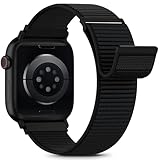
A woven nylon loop with a hook-and-loop closure and no buckle. It is light and breathable for workouts, and you can rinse it and let it dry when it gets sweaty.
Honeystraper 6-Pack Nylon Loop Bands
A multi-pack of woven loops in assorted colors. It lets you swap bands during the week and rotate which one touches your wrist, which can help if a single strap tends to irritate.

AMSKY 6-Pack Silicone Sport Bands
A set of silicone bands in different colors at a low outlay. Handy when you want to try silicone without committing to a single, pricier strap.

How to Choose Smartwatch Band Material for Allergies FAQ
What is the best smartwatch band material for sensitive skin?
For most people with sensitive skin, fluoroelastomer or silicone is best, because they are hypoallergenic, latex-free, and easy to clean. The Apple Sport Band at $40 to $50, the Samsung Galaxy Watch Sport Band at $30 to $40, and the Nomad Sport Band at $50 to $60 all use fluoroelastomer, and the Barton Silicone Elite at $20 to $30 uses silicone. For a person who sweats a lot, nylon is also good, because it is breathable. The Apple Sport Loop at $40 to $50 and the Clockwork Synergy NATO Nylon Band at $25 to $35 both use nylon. For a person with a nickel allergy, titanium is best. The Carterjett Titanium Band at $80 to $100 uses titanium and is nickel-free.
Can a smartwatch band cause a rash even if it is hypoallergenic?
Yes, even a hypoallergenic band can cause a rash if it is too tight, dirty, or wet for a long time, because trapped sweat and moisture can irritate skin. Clean your band every day with warm water and mild soap, dry your wrist and the band fully, wear the band snug but not tight, and take the watch off for 30 minutes a day to let your skin breathe. If you get redness, itching, or a rash, stop wearing the band, clean your wrist, and talk to a clinician if it does not clear in a few days. This article is general information, not medical advice.
Is silicone or nylon better for allergies?
For sport and swimming, silicone is better, because it dries quickly and does not absorb sweat. The Barton Silicone Elite at $20 to $30 uses silicone and is swim-proof. For breathability and sleep, nylon is better, because it lets air reach your skin. The Apple Sport Loop at $40 to $50 and the Clockwork Synergy NATO Nylon Band at $25 to $35 both use nylon and have high breathability. For a person with a latex allergy, both silicone and nylon are usually latex-free, but check the maker listing. For a person who sweats a lot, nylon is often more comfortable, but it needs to be washed more often.
What is the cheapest good hypoallergenic smartwatch band?
The cheapest good option in this guide is the Barton Silicone Elite, at $20 to $30 with a rating of 4.6 out of 5, because it uses silicone, is latex-free, and is swim-proof for a low price. The Clockwork Synergy NATO Nylon Band, at $25 to $35 with a rating of 4.5 out of 5, is also a low-cost option, with nylon fabric and high breathability. The Samsung Galaxy Watch Sport Band, at $30 to $40 with a rating of 4.5 out of 5, is also a low-cost option, with fluoroelastomer and latex-free material. Start with one of these three if price is the main factor, and check material, hypoallergenic claim, and fit next. For the best overall value, the Barton Silicone Elite at $20 to $30 is a better choice because it offers a rating of 4.6 out of 5 and a hypoallergenic silicone material for a low price.
FAQ
What is the best smartwatch band material for sensitive skin?
Can a smartwatch band cause a rash even if it is hypoallergenic?
Is silicone or nylon better for allergies?
What is the cheapest good hypoallergenic smartwatch band?
Related guides
- Best Cheap RAM for Desktop Under 100 in 2026: 7 RAM Kits That Are Fast, Reliable, and Built for Desktops Under $100 Without RAM That Is Too Slow, Too Incompatible, or Too Tall
- Best Budget GPU for Students in 2026: NVIDIA GeForce RTX, AMD Radeon RX, and Intel Arc Cards Chosen by Your Course, Your Power Supply, and a Degree’s Whole Four Years
- Best Webcam for Dark Gaming Rooms in 2026: Low-Light Webcams for Streaming and Gaming
- How to Choose Scanner for PC Photo Scanning in 2026: 6 Top Scanners for PC Photo Scanning, Sharp Photos, and Easy Use
More from Amazon
Programs that pair well with the guide above. Offers and eligibility are set by Amazon and may change.
Free shipping on eligible items, Prime Video and more. Eligible new members can start with a free trial.
Start a Prime free trialAd-free music streaming. Eligible new subscribers can start with a free trial.
Try Music Unlimited freeA Prime membership for ages 18-24 with a trial period. Eligibility is set by Amazon.
See Prime for Young AdultsAudiobooks and podcasts to listen to on the go. Eligible new members can start with a free trial.
Try Audible freeAs an Amazon Associate we earn from qualifying purchases.

Write Your Review
No reviews yet. Be the first to share your experience!