
What's inside
- Best Lighting Kit for PC Creators: Key First, Fill Second, Background Third
- Quick Comparison: Best Lighting Kit for PC Creators Models and Kits
- Detailed Reviews: Best Lighting Kit for PC Creators Picks
- Buying Guide: How to Choose the Best Lighting Kit for PC Creators
- Frequently Asked Questions About Best Lighting Kit for PC Creators
As an Amazon Associate I earn from qualifying purchases. This post may contain affiliate links at no extra cost to you.
A creator’s lighting is the difference between a face the audience trusts and a face it studies for the wrong reasons. A PC creator, streamer, tutor, podcaster, seller, teacher, works inside a small geography, a desk, a monitor, a camera at arm’s length, a room whose ceiling light was designed for finding socks, and the best lighting kit for PC creators is the one built for exactly that geography: a soft key light in its maker’s design, large enough in its diffused face to flatter at a desk’s distance, with a colour temperature in its stated range that can be matched to the room and held there, brightness in its provisions that models a face at its working middle rather than bleaching it at its maximum, and a control, by dial, by desk control in its pattern, or by an application in its maker’s system, that a creator can adjust mid-sentence without leaving the frame to hunt a menu. This guide compares the current field as a working desk’s equipment, not as photography’s: key lights first, because one good key does eighty percent of a face’s work; fill and background as the kit’s second act, the modest panel or strip in its maker’s range that lifts the room’s far side from a cave to a set; and the unglamorous furniture, desk mounts in their patterns, stands, cables dressed once, because a lighting kit that must be rebuilt for every session will, by the third week, be a lighting kit that lives in its box, and its creator will be lit by a monitor like everyone else.
Softness is the first specification and it is bought with size and distance, in that order. A light appears soft, its shadows gentle, its skin kind, in proportion to how large it appears from the face, so the diffused panels in this table, in their makers’ designs, are graded first on the area of their lit face and the quality of their diffusion, and every one of them is used as close as the desk allows, commonly just outside the frame at arm’s length, angled from the camera’s side at a portrait’s modest height, where its apparent size is greatest and the brightness it needs, and the heat and glare that come with brightness, are least. Colour is the second: temperature in the makers’ stated Kelvin ranges, set to agree with the room’s surviving light so face and background are one photograph, and colour quality behind it, in the makers’ stated terms where they publish them, that keeps skin the colour skin is under a window, because a cheap panel’s greenish testimony is the signature its audience reads as illness. Control is the third and the most under-bought: a creator adjusts light in the thirty seconds before a call and in the first minute of one, by a control their hand finds without an expedition, a dial on the light in its design, a desk controller in the Elgato pattern, an application whose scenes in its maker’s system recall the whole rig at a tap, and a kit whose adjustment lives three menus deep in a phone application will be adjusted once, at its unboxing, and resented at its factory setting forever.
The products compared here are real, currently sold creator lights from Elgato, Logitech, Razer, NEEWER, Lume Cube, and Godox, spanning single desk keys, paired studio kits, monitor panels, and a streamer’s key, several of them sold as kits with their mounts in their makers’ patterns and all of them usable as a desk system. They are graded on softness and colour first, then on the desk’s own terms: mounting, the clamp, the stand, the monitor mount in their designs, and the footprint each steals from a working surface; control, dial, controller, and application in their systems, with scenes and memory where their makers provide them; system growth, whether a second light, a fill, a background panel in the same maker’s range joins the first under one control; power and heat, a desk’s sockets and a summer’s room; and the maker’s support, because these are electronic instruments with fans, batteries in the portable rows, and hinges, and a creator’s season will ask their maker a question.
Our Top Picks
Best Lighting Kit for PC Creators: Key First, Fill Second, Background Third
The Key Light’s Portrait: Position, Temperature, and the Working Middle
Place the key as a portraitist with a small room would. It belongs just outside the camera’s frame, on the side the face naturally turns toward, at or a little above eye level in the standing pattern, angled gently down and across, so one side of the face is modelled and the other is shadowed by degrees rather than abandoned, the ratio a viewer reads as depth. Its distance is the desk’s arm’s length, its brightness set in the camera’s own preview, dimmed from its maximum until the forehead is not a landing strip and the eyes have their catchlights, because every panel in this table is sold by its maximum and used at its middle, and a creator who runs a key at full has bought a softbox and is using it as a searchlight. The fill, where the kit provides or grows one, sits on the camera’s other side or behind the monitor in its pattern, at a fraction of the key’s brightness in the session’s setting, lifting the shadow side’s detail without flattening the portrait into a passport, and the background light, a small panel or the room’s own lamp conscripted into the system, gives the frame’s far side one warm, dim source of its own, so the creator’s face is the brightest thing in the picture by a head and not by a landslide, the ratio a camera’s exposure repays with a richer, calmer image and a background that reads as a place.
Temperature is matched once and then defended. The room’s surviving sources, a window’s daylight by day, the house’s lamps by night, set the key’s stated Kelvin in its maker’s adjustment, warmer in the lamplit evening, cooler under a daylight office, and a creator with both lives saves both settings as scenes in their control’s provisions where the maker provides them, because a rig re-matched nightly is a rig re-invented nightly, and invention is the enemy of the thirty-second setup. The camera is set in the same session and then left alone with equal discipline: exposure and white balance in its provisions fixed to the rig where the creator’s application allows, so the picture stops hunting every time a hand crosses the frame, and the whole arrangement, key position, temperature, working brightness, camera settings, is photographed and recorded with the creator’s production notes, because a moved desk, a borrowed light, and a helpful rearrangement are all certainties in a working room, and a rig that can be restored from a photograph in five minutes is a professional’s rig, while one restored from memory is a hobby’s.
Desk Furniture: Mounts, Stands, Cables, and the Footprint Tax
A desk is contested land and a lighting kit pays rent in three currencies. The first is surface: a stand in its pattern stands on the desk and charges by the footprint, a clamp in its design, the Elgato pole pattern in this table foremost, charges almost nothing and is this guide’s default counsel for a working desk, and a monitor mount in the Logitech pattern charges nothing at all and accepts, in exchange, the monitor’s own address, top centre, which flatters less than a key’s side station and serves the call-first creator whose desk cannot house a pole. The second currency is reach: a light must arrive at its portrait station, just outside the frame at eye level, from wherever its mount lives, and a kit whose arm or pole in its maker’s provisions cannot make that journey from the desk’s back edge is a kit auditioning for a different room, to be discovered in the returns window and not in the third month. The third is cable, dressed once, along the pole, behind the desk, to a socket with the system’s whole load counted, key, fill, monitor, and machine summed with the margin every electrical guide on this site prescribes, never through a daisy chain of strips, because a creator’s desk is a small power station and is wired like one, in daylight, once, properly.
Growth is the furniture’s future tense and it is bought at the first purchase. A single key from a maker whose range holds its fill, its background panel, and its controller in one system, the Elgato pattern in this table being its clearest citizen, grows by addition, one control learning a second light’s name. A paired kit in the NEEWER pattern buys the growth in advance, two lights in its box at a figure the singles cannot match, at the cost of a generalist’s controls and a stand’s footprint for each. A monitor panel and a key from different houses will coexist on any desk and be adjusted by two hands in two systems forever, which some creators accept as variety and this guide records as a tax, to be chosen knowingly. The audit that decides is in the buying guide, desk measured, frame composed, scenes counted, and it is performed before the first box is opened, because lighting is the one part of a creator’s studio that cannot be auditioned in a listing’s photograph, only in the creator’s own camera, in the creator’s own room, at the creator’s own working middle.
Quick Comparison: Best Lighting Kit for PC Creators Models and Kits
| Model | Type, Colour Range and Key Specs | Best For | Typical Price Range |
|---|---|---|---|
| Elgato Key Light | Desk key panel in Elgato’s line, stated temperature range in maker’s figures, pole mount in maker’s pattern, application and controller provisions in maker’s system | Best lighting kit for PC creators overall | $180 – $220 |
| Elgato Key Light Air | Smaller desk key in Elgato’s line, stated temperature range in maker’s figures, stand in maker’s design, same control system in maker’s provisions | Best smaller-desk key | $120 – $150 |
| Logitech Litra Glow | Monitor panel in Logitech’s line, stated temperature range in maker’s figures, monitor mount in maker’s design, USB powered in maker’s pattern | Best call-first light | $55 – $75 |
| NEEWER Two-Light LED Kit Class | Paired panels with stands in NEEWER’s line, stated temperature patterns in maker’s range, kit provisions in maker’s design | Best value full kit | $90 – $150 by kit |
| Razer Key Light Chroma | Desk key panel in Razer’s line, stated temperature and colour patterns in maker’s terms, application control in maker’s system | Best for streamers’ sets | $130 – $170 |
| Godox LEDP260C Class | Panel in Godox’s line, stated temperature range in maker’s figures, stand and mount patterns in maker’s range, remote provisions in maker’s design | Best photo-line value | $60 – $100 by pattern |

Ci-Fotto LED Video Light 2-Pack, 5600K Dimmable USB Camera Lighting Kit | Photography Lights with Mini Tripod & Colored Filters for Photo Studios, Small Angle Shooting, Video Recording,Game Streaming
As an Amazon Associate we earn from qualifying purchases. Product prices and availability are accurate as of the date/time indicated.

Logitech for Creators Litra Glow Premium LED Streaming Light - Graphite | Computer lighting for video conferencing, Zoom meetings, adjustable mount, desktop app control for PC/Mac
As an Amazon Associate we earn from qualifying purchases. Product prices and availability are accurate as of the date/time indicated.
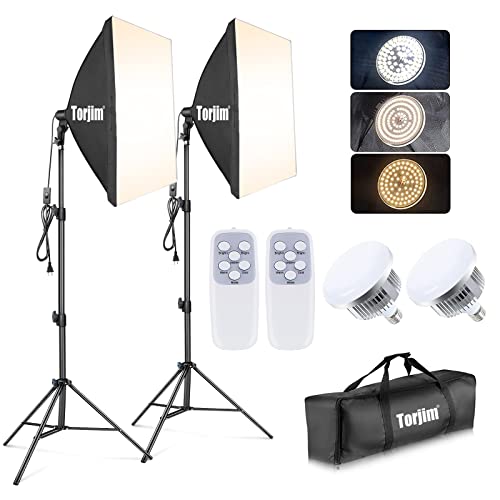
Torjim Softbox Photography Lighting Kit, 2Pcs 27" x 27" Professional Soft Box | 3000K-7500K 85W LED Bulbs with Remote, Photography Continuous Lighting Kit for Studio Lights, Portrait, Video Recording
As an Amazon Associate we earn from qualifying purchases. Product prices and availability are accurate as of the date/time indicated.
Prices shown are approximate and for reference only. Prices change often, so please check the current price on Amazon before you buy.
Colour temperature range, brightness in the maker’s stated terms, colour quality where the maker publishes it, mount or stand pattern, and control system are each maker’s stated details for the current version and kit. Ratings are editorial for PC creators: softness and colour honesty at a desk’s distance, mounting and footprint, controls a hand or a scene can find, system growth under one control, and support.
Detailed Reviews: Best Lighting Kit for PC Creators Picks
1. Elgato Key Light – Best Overall
Elgato’s key takes the overall rating as the desk’s professional pattern in its line: a large diffused face in its design that flatters at arm’s length, a pole clamp in its pattern that charges the desk almost no surface, a temperature range in its figures that matches a room, and a control system in its provisions, application and desk controller in its range, that recalls the whole portrait as a scene. It is the key its competitors are photographed beside.
Its price is its tier’s, stated without apology. For the working creator, it earns its place outright.
2. Elgato Key Light Air – Best Smaller-Desk Key
The Air brings the same system’s manners to the smaller desk in its line, a more modest panel in its design on its own stand in its pattern, for the creator whose surface is a tray table’s cousin and whose portrait must be made in a corner. It grows inside the same control as its sibling, which is its row’s quiet argument for the system’s citizens.
As the small desk’s key, it stands.
3. Logitech Litra Glow – Best Call-First Light
Logitech’s panel is the caller’s citizen in its line, a monitor-mounted light in its design that is present at every session without a setup, honestly coloured in its stated terms, for the creator whose work is teaching, selling, and meeting, and whose stream is a calendar. Paired later with a true key in this table, it becomes the fill it was born to be.
At its station, it earns its place.
4. NEEWER Two-Light Kit – Best Value Full Kit
NEEWER’s paired kit buys the whole portrait at once in its line, key and fill in its box with their stands in its pattern, at a figure the single-key houses charge for one light, for the creator furnishing a first studio against a deadline. Its controls are its class’s, dialled by hand in its design, and its stands pay the footprint tax this guide itemises, counted before purchase.
As the value kit, it gets more creators lit than any row here.
5. Razer Key Light Chroma – Best for Streamers’ Sets
Razer’s key serves the set that is also a stage in its line, a large panel in its design whose colour patterns in its stated terms light a background as an instrument, under its application’s control in its system, for the streamer whose room is part of the performance. Its colour is a stage tool, used by the portrait’s rules in this guide and switched to them by its scenes.
For its citizen, it is soundly placed.
6. Godox Panel Class – Best Photo-Line Value
Godox’s panels bring the photographic line’s value to the desk in its range, stated temperatures in its figures and a build in its patterns drawn for studios, with stands and mounts in its provisions to be assembled as a system by its buyer. For the creator who also photographs, it is the one-light-two-lives row.
As the photo-line value, it completes the table.
Buying Guide: How to Choose the Best Lighting Kit for PC Creators
The Desk Audit: Frame, Surface, and Scenes
Write the audit’s five facts before a listing is opened. The frame: your camera, its height, its distance, and the portrait’s station the key must reach, just outside the frame at eye level, measured in the room and not imagined from a listing. The surface: the desk’s honest acreage and its back edge’s accessibility, which chooses clamp against stand against monitor mount by the footprint tax each charges. The room’s light: window by day, lamps by night, and the temperatures the key must match, entered as the two scenes most creators actually live. The system’s future: the fill and the background light you will want by the second season, and whether the first purchase’s control, in its maker’s system, will adopt them or tax them. And the power: the desk’s sockets and the system’s whole load, key, fill, machine, and monitors summed with margin, wired once and properly. Order against the five, inside a returns window that contains a full working week of real sessions, because a light is graded by its fifth call and not its first, its controls by a hand in a hurry, its colour by your own skin in your own camera, and its mount by the desk it actually has to live on.
Spend by the portrait’s priorities, which are the guide’s and not the catalogue’s: the key’s diffused size first, since softness is the product; temperature range and stated colour quality second, the face’s honesty; control third, a dial, a controller, a scene, anything a hand finds in thirty seconds; mounting fourth, the desk’s own pattern; and brightness last, bought at the level a close light’s working middle needs, because a panel’s maximum is a figure for a warehouse. Refuse, in the same pass, the category’s standing frauds: the ring sold as a desk key to a creator whose portrait wants direction and not a halo, the bargain panel whose colour is a rumour its maker will not state, and the kit of many small lights in place of one large one, since five hard sources make five hard shadows and a face is not improved by a committee of them.
Keeping the Rig: One Setup, Every Session
Maintain the lighting as the studio’s standing set. Its positions, temperatures, and working brightnesses are recorded in the production photograph this guide prescribes, its scenes saved in its control’s provisions, its cables dressed and its load summed once and audited at every addition, because a creator’s desk accretes like a harbour and its wiring should not. Its diffused faces are wiped dry at the season’s turn, since softness is a surface property and dust is a harder light by degrees; its mounts are tightened, clamp and stand and pole, at the same sitting; and a second station, the travelling kit, the borrowed room, is built from the production photograph rather than from a new season of experiments, a small panel in this table serving as the road key by the same portrait rules at a hotel desk’s distance.
Teach the rig to anyone who shares the desk as this guide has taught it, key close and high, fill a fraction, background a whisper, camera fixed to the light, because a room that lights its people well is, across a year of calls and recordings, the cheapest production value in the creator’s whole business. Do that, frame measured, key soft, scenes saved, load honest, and the best lighting kit for PC creators becomes what its buyer actually wanted: not a purchase, but a standing arrangement, thirty seconds from darkness to a portrait, that turns a spare room’s desk into the place where a face the audience trusts goes to work.
Frequently Asked Questions About Best Lighting Kit for PC Creators
What is the best lighting kit for PC creators?
Elgato’s Key Light is the best overall for its large diffused panel, its desk-sparing pole clamp, its room-matching temperature range, and a control system that recalls a whole portrait as a scene, with its Key Light Air the smaller desk’s key in the same system, Logitech’s Litra Glow the call-first monitor light, NEEWER’s two-light kit the value full kit, Razer’s Key Light Chroma the streamer’s stage key, and Godox’s panels the photo-line value. Fit yours by the desk audit in this guide: the frame your camera actually composes and the station your key must reach, the surface and the mount it can honestly house, the room’s day and night temperatures as the two scenes you will save, and the system’s future, because a first light whose control adopts its fill and its background is a studio being built, and one whose does not is a tax being scheduled.
Do I need two lights, or is one key light enough?
One good key is enough to begin, and for many creators it is enough to finish, because a single soft key at its portrait station, close, high, and dimmed to its working middle, with the room’s own lamp conscripted as the background’s whisper, makes a portrait an audience trusts, which is the whole assignment. The second light earns its purchase against a named fault: a shadow side that swallows detail your work needs, answered by a fill at a fraction of the key’s brightness; a background that reads as a cave behind a lit face, answered by a small panel or a disciplined lamp; or a set whose colour and depth are part of a stream’s performance, answered by the streaming rows in this table. Buy in that order, key, then the fault’s answer, inside one maker’s control system where you can, and judge each addition in your own camera across a working week, because lighting grows by faults corrected and not by boxes accumulated, and the creator with one key perfectly placed out-lights the creator with four lights arranged by hope, every night of the week.
What colour temperature should a PC creator use?
The temperature your room is already using, matched rather than imposed, because a face lit at one temperature against a background lit at another reads as two photographs stitched together. Under a window’s day, that is the cooler half of a light’s stated range in its maker’s figures; in a lamplit evening room, the warmer half; and the setting is made in your own camera’s preview, skin the colour skin is in that room’s light, then saved as a scene in your control’s provisions so the thirty-second setup recalls it whole. Colour quality rides behind temperature as the quiet specification: a light whose maker states its colour rendering in its terms keeps a face honest at any setting, while a bargain panel’s greenish testimony at the same number is a colour failure wearing a temperature’s clothes, which is why this guide grades stated colour before brightness. Fix the camera’s white balance to the rig where your application allows, in the same session, so the picture stops re-deciding the room’s temperature every time your hands move.
Where should I place a key light at a PC desk?
Just outside your camera’s frame, on the side your face naturally turns toward, at or a little above eye level, angled gently down and across, as close as the desk allows, which at a creator’s desk is commonly arm’s length. Each term earns its place: outside the frame, so the light works without appearing; high, so shadows fall as they do under a sky; across, so one side of the face is modelled and the other shadowed by degrees, the ratio an audience reads as depth; and close, so the source appears large and therefore soft, and can be run at the working middle where every light in this guide flatters, instead of at the bleaching maximum its marketing photographs. Set its brightness in the camera’s preview, forehead unburned, eyes carrying their catchlights; give the background one dim warm source of its own; photograph the whole arrangement for your production notes; and then leave it standing, because a key light rebuilt for every session is a key light that will, by the third week, be a box in a cupboard and a creator lit by a monitor.
Related guides
- Best Mid Tower Case Size Guide in 2026: How to Use This Best Mid Tower Case Size Guide to Pick a Mid Tower Case That Fits Your Motherboard, GPU, and Desk
- Best High End GPU for 1440p Gaming in 2026: Best High End GPU for 1440p Gaming for Smooth Frames, Good Graphics, and Simple PC Use
- Best Scanner for PC Small Offices in 2026: Best Scanner for PC Small Offices
- Best Stylus vs Mouse for Tablet Editing in 2026: Apple Pencil Pro, S Pen, and MX Master Compared for Photo, Video, and Drawing Work
More from Amazon
Programs that pair well with the guide above. Offers and eligibility are set by Amazon and may change.
Free shipping on eligible items, Prime Video and more. Eligible new members can start with a free trial.
Start a Prime free trialAd-free music streaming. Eligible new subscribers can start with a free trial.
Try Music Unlimited freeA Prime membership for ages 18-24 with a trial period. Eligibility is set by Amazon.
See Prime for Young AdultsAudiobooks and podcasts to listen to on the go. Eligible new members can start with a free trial.
Try Audible freeAs an Amazon Associate we earn from qualifying purchases.

Write Your Review
No reviews yet. Be the first to share your experience!